Entradas con la etiqueta ‘Suelos’
Un informe final de Proyecto de investigación.
 9 de febrero de 2026 |
  Autor:
 Este proyecto tiene muchos años de antigüedad, pero algunos de sus resultados pueden servir de antecedentes a nuevos trabajos de investigación, razón por la cual lo comparto aquí, considerando que ya ha pasado un tiempo más que prudente (sin ser publicado) en los archivos de la entidad patrocinante, a los que poca gente tiene acceso directo.
El Informe corresponde al proyecto:
ESTUDIO GEOMORFOLÓGICO E HIDROLÓGICO APLICADO A LA EVALUACIÓN Y CONTROL DE LA EROSIÓN HÍDRICA DEL SISTEMA JEAN MAIRE, PROVINCIA DE CÓRDOBA, con subsidio de SeCyT Res. 106/93,en el marco del PROGRAMA DE EVALUACIÓN Y CONTROL DE LA EROSIÓN HÍDRICA COMO CONSECUENCIA DE SU IMPACTO SOBRE EL PATRIMONIO PÚBLICO Y PRIVADO.
Dicho proyecto fue dirigido por Sanabria, Jorge y contó con la participación de docentes e investigadores del Dpto de Geología Aplicada de la UNC, entre los que yo me contaba.
Laguna Larga by GracielaL.Argüello
Si este post les ha gustado como para llevarlo a su blog, o a la red social, por favor, mencionen la fuente porque esta página está registrada con IBSN 04-10-1952-01.
Un abrazo y hasta el miércoles. Graciela.
 Publicado en Apuntes para estudiantes de Geología, Lecturas para colegas y especialistas |
  Etiquetas: Agua, Argentina, Córdoba, Erosión, Laguna Larga, Suelos |
  No hay comentarios »
Más de Eating dirt. El original en Inglés se subió el viernes pasado.
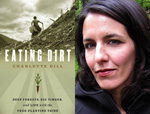
No me canso de compartir pequeños fragmentos de este libro de Charlotte Gill porque es uno de los mejores textos que he encontrado sobre ecología y reforestación. Lo considero una obra magistral, por eso la difundo.
Woods Lagoon es un bolsón de agua rodeado por un viejo bosque de cedros. Los árboles se elevan hasta ser blancos mástiles muertos como bayonetas de madera. Es un ecosistema nudoso que retoña desde la roca, y una delgada capa de tierra, golpeado durante la maduración por cataratas de lluvias costeras. Los bosques aquí son como un monstruo de la naturaleza, un testamento de la tenacidad para el crecimiento del cedro, que tratará de crecer dondequiera que sus semillas encuentren humedad. Huele y se siente como un lugar no interrumpido por la historia, poblado por viejos seres de pasado. Si bajaran en picada pterodáctilos desde el follaje, difícilmente nos tomarían por sorpresa.
Una belleza, ¿verdad?
Un abrazo y nos vemos el lunes con uno de mis propios textos. Graciela.
Publicado en Ecología, Geología y literatura |
Etiquetas: Ambiente, Bosques, Canadá, Reforestación, Suelos |
No hay comentarios »
Las conclusiones del informe sobre la cuenca baja del Arroyo Soconcho
Este post completa la información producida en un Proyecto de investigación, cuyos capítulos anteriores constituyeron diversos posts. De ser utilizada la información, el trabajo debe citarse como:
Sanabria, J.A.; Argüello, G.L. y Dasso, C. Capítulo VIII. Conclusiones en: Sanabria, J.A.: Argüello, G.L. ;Dasso, C. y Beltramone, C.. 1998. Informe final del Proyecto de investigación PEDOLOGIA, GEOMORFOLOGIA Y ESTRATIGRAFIA DEL CUATERNARIO EN LA CUENCA BAJA DEL ARROYO SOCONCHO, DPTO CALAMUCHITA, CORDOBA
capVIII soconcho by GracielaL.Argüello on Scribd
Aún faltan los anexos que subiré cuando los encuentre entre mis archivos
Si este post les ha gustado como para llevarlo a su blog, o a la red social, por favor, mencionen la fuente porque esta página está registrada con IBSN 04-10-1952-01.
Un abrazo y hasta el miércoles. Graciela.
Publicado en Lecturas para colegas y especialistas |
Etiquetas: Argentina, Ciencia, Córdoba, Geociencias, Geomorfología, Suelos |
No hay comentarios »
More from the book Eating dirt. Será traducido al español el próximo viernes.
I keep sharing some paragraphs from this book by Charlotte Gill, because I consider it is probably the best one that I have ever met on the subject of ecology and reforestation. Enjoy it as much as I myself do.
Woods Lagoon is a purse of water ringed by an old cedar forest. The trees rise to dead white spars like wooden bayonets, It is a gnarled ecosystem, sprouted out of rock, and thin dirt, pounded through maturity by cataracts of coastal rains. The forests here are something of a natural freak, a testament to the acreeting tenacity of cedar, which will try to grow wherever their seeds find moisture. It smells and feels like a place uninterrumpted by history, populated by hoary beings of the past. If pterodactyls swooped down from de canopy, they’d hardly take us by surprise.
See you next Monday with some texts of my own. Graciela.
Publicado en Ecología, Geología y literatura |
Etiquetas: Ambiente, Reforestación, Suelos |
No hay comentarios »
La Inteligencia Artificial comenta un paper en que fui coautora
Hace ya varios meses, Academia.Edu me informó que la Inteligencia Artificial había hecho una reseña sobre uno de los trabajos en que fui coautora. Hoy se me ocurrió que podía servirles ese comentario, y lo subo sin cambiarle ni una coma, aunque señale cosas que podrían mejorarse. De todas maneras, me parece una reseña muy positiva.
El trabajo es:
Rouzaut, S.; Orgeira, M.J.; Vásquez, C.; Argüello, G.L. y Sanabria J. 2011. Rock Magnetism in present soils in the center of Córdoba province. Resumen expandido. Latinmag Letters, Volume 1, number 2. D05 1-5. 2nd Biennial meeting Latinmag. Proceedings, Tandil. Argentina.
Y aquí pueden leer la reseña.
Publicado en Lecturas para colegas y especialistas |
Etiquetas: Argentina, Córdoba, Inteligencia Artificial, Magnetismo, Suelos |
No hay comentarios »